Our history

Biography

Founded in 2006 and coordinated by Carla Langella, Professor of Design at the University of Naples Federico II, the lab investigates how knowledge from the life sciences can inspire innovative design approaches, materials, products and technologies.

Through interdisciplinary research, experimentation and collaboration, Hybrid Design Lab connects scientific discovery with design culture and human needs, exploring new ways to translate the complexity of living systems into meaningful design possibilities.

Bringing together diverse expertise and perspectives, the lab fosters a dialogue between nature, technology and design, with the aim of making scientific research a source of innovation for society.

Different disciplines. One shared curiosity. New possibilities through design.
new exhibition

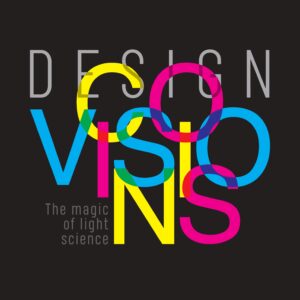
design co-vision

The Design Co-Vision program aims to explore the potential intersections between design, optical physics, light sciences, astrophysics, and art, focusing on vision and optical phenomena across various scales, from the cosmic to the nanometric dimensions.

Young designers enrolled in the international Master’s Degree program in Design for the Built Environment (DBE) at the Department of Architecture, University of Naples Federico II, had the opportunity to collaborate with internationally renowned scientists from various fields of physics, professional designers, and artists. Together, they developed projects in product design, digital design, and exhibit design, investigating the connections between these disciplines. Topics included optical illusions, visual perception, solar particles and magnetic fields, thermal shields, auroras, solar spectropolarimetry, and cosmic geometries.

The activities took place from April to June 2024 at the Città della Scienza and the Department of Architecture at Federico II University. These efforts will culminate in a series of exhibitions and conferences to be held at partner institutions during 2024/2025 and as part of the XXXVIII edition of Futuro Remoto CO-SCIENZE